Follow Me On Social Media!
Spanish Beef Stew: Indulge in Bold, Hearty Flavors at Home

Introduction to Spanish Beef Stew
Imagine walking into your kitchen, the aroma of a Spanish Beef Stew wafting through the air, instantly transporting you to the sun-drenched streets of Spain, where the vibrant culture and rich culinary traditions meet. This dish embodies comfort, bringing family and friends together, reminding us that there’s something special about a hearty stew simmering on the stove, patiently coaxing flavors into a warm embrace.
What makes Spanish Beef Stew so special? It all starts with the ingredients. The harmonious blend of tender beef, colorful vegetables, and aromatic spices come together to create a dish that is both satisfying and full of depth. Each ingredient works in unison to tell a story of tradition and flavor that speaks to the heart of Spanish cuisine.
The Ingredients that Shine
-
Beef: For the best flavor and tenderness, I recommend using chuck roast. It’s perfect for slow cooking, allowing the meat to become melt-in-your-mouth tender while soaking up the robust flavors of the stew. Cut into hearty chunks, this meat forms the backbone of your dish.
-
Olive Oil: A staple in Spanish cooking, olive oil not only adds richness but also helps to brown the beef perfectly before the simmering begins. Don’t be shy—use a good quality extra virgin olive oil for the most authentic taste.
-
Onions and Garlic: The combination of sautéed onions and garlic creates a fragrant base that enhances every bite. When sweat our onions to a golden hue, it brings out their natural sweetness, while garlic adds a fragrant punch.
-
Bell Peppers and Tomatoes: For a pop of color and flavor, bell peppers are a must. Fresh tomatoes, either diced or crushed, provide acidity and balance, making each spoonful vibrant.
-
Spices: A mix of smoked paprika, cumin, and bay leaves introduces a characteristic warmth and subtle smokiness that is quintessentially Spanish. These spices weave their way through the dish, infusing it with character.
-
Broth and Wine: A splash of red wine not only adds depth but also works wonders in tenderizing the meat. Using beef broth as your liquid helps ensure every component stays juicy and flavorful.
In this Spanish Beef Stew, every ingredient plays its role, creating a delightful harmony of flavors that’s sure to warm your heart and satisfy your palate. So, let’s roll up our sleeves and dive into this culinary adventure!
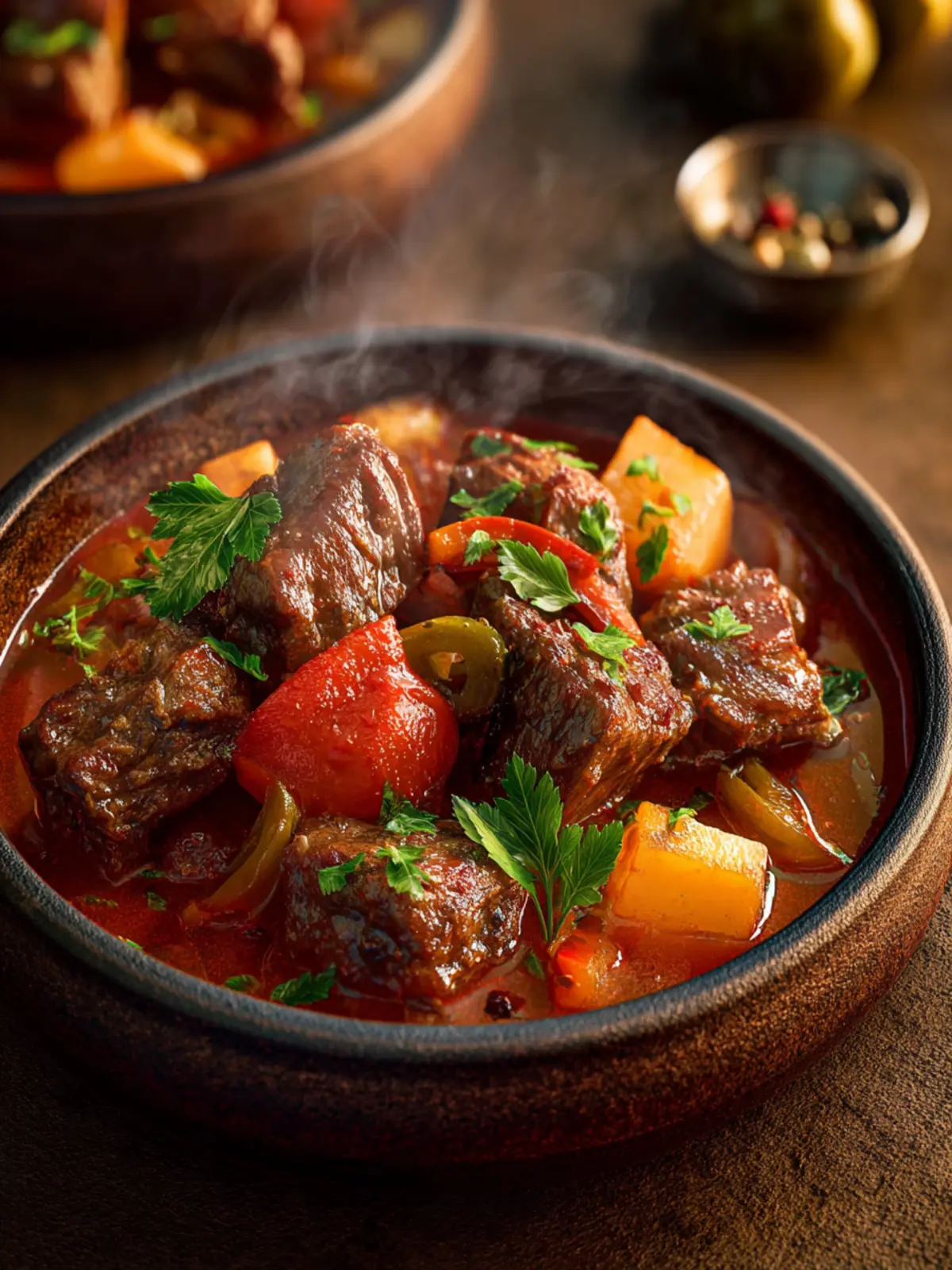
Key Ingredients for Spanish Beef Stew
Creating a comforting bowl of Spanish beef stew is all about selecting the right ingredients that contribute to its rich, hearty flavor. Each ingredient plays a vital role in crafting this quintessential dish, making every bite a delight.
Beef Chuck
I recommend using beef chuck for its perfect balance of tenderness and flavor. When simmered low and slow, it breaks down beautifully, becoming melt-in-your-mouth tender while adding robust taste.
Olive Oil
Using high-quality olive oil is essential, not only for sautéing the beef but also for building a flavorful base. This classic Spanish staple brings a fruity richness that enhances the overall profile of the stew.
Vegetables
Onions, carrots, and bell peppers are your go-to trio. They provide layers of sweetness and depth, creating a wonderful backdrop for the savory beef. The simplicity of these ingredients makes the stew feel homemade and heartwarming.
Paprika
Spanish paprika is the star seasoning here. Its smoky flavor adds an authentic touch, transporting you straight to the heart of Spain. For an extra kick, consider using a mix of sweet and hot paprika.
Tomatoes
Canned tomatoes bring acidity and brightness to the dish. Opt for whole peeled tomatoes if you want to control the texture—crushing them by hand adds to the rustic charm of the stew.
Broth
Beef broth is the backbone of your stew, providing richness and moisture. Don’t skimp on quality here; a good broth can turn an ordinary dish into something special.
By sourcing these key ingredients, you’re setting the stage for a memorable Spanish beef stew experience that will impress family and friends alike.
Why You’ll Love This Recipe
Imagine settling in after a long day, the aroma of Spanish beef stew wafting through your home, wrapping you in a comforting embrace. This dish isn’t just a meal; it’s an experience that evokes warmth and connection, where each bite tells a story of rich flavors and heritage.
-
Hearty and Balanced: The combination of tender beef, vibrant vegetables, and rich spices makes for a satisfying meal that’s as nourishing as it is delicious. It’s the kind of stew you want to come home to, one that feels like a warm hug in a bowl.
-
Easy Preparation: In just a few steps, you’ll find yourself on a culinary journey to Spain without even needing a passport. Whether you’re a seasoned cook or a kitchen novice, this recipe is designed to guide you through, ensuring your confidence in the kitchen grows with every simmer and stir.
-
Versatile Serving Options: Serve it over rice, with crusty bread, or even on its own — there’s no wrong way to enjoy this robust stew. It also makes for fantastic leftovers, allowing you to relish the flavors even after the initial serving.
-
Perfect for Gatherings: Planning a cozy dinner with friends or family? This Spanish beef stew can easily be made in large batches, making it the ideal dish for sharing stories and laughter around the table.
With every spoonful, you’re not just tasting a dish; you’re savoring a piece of Spanish culture that brings people together.
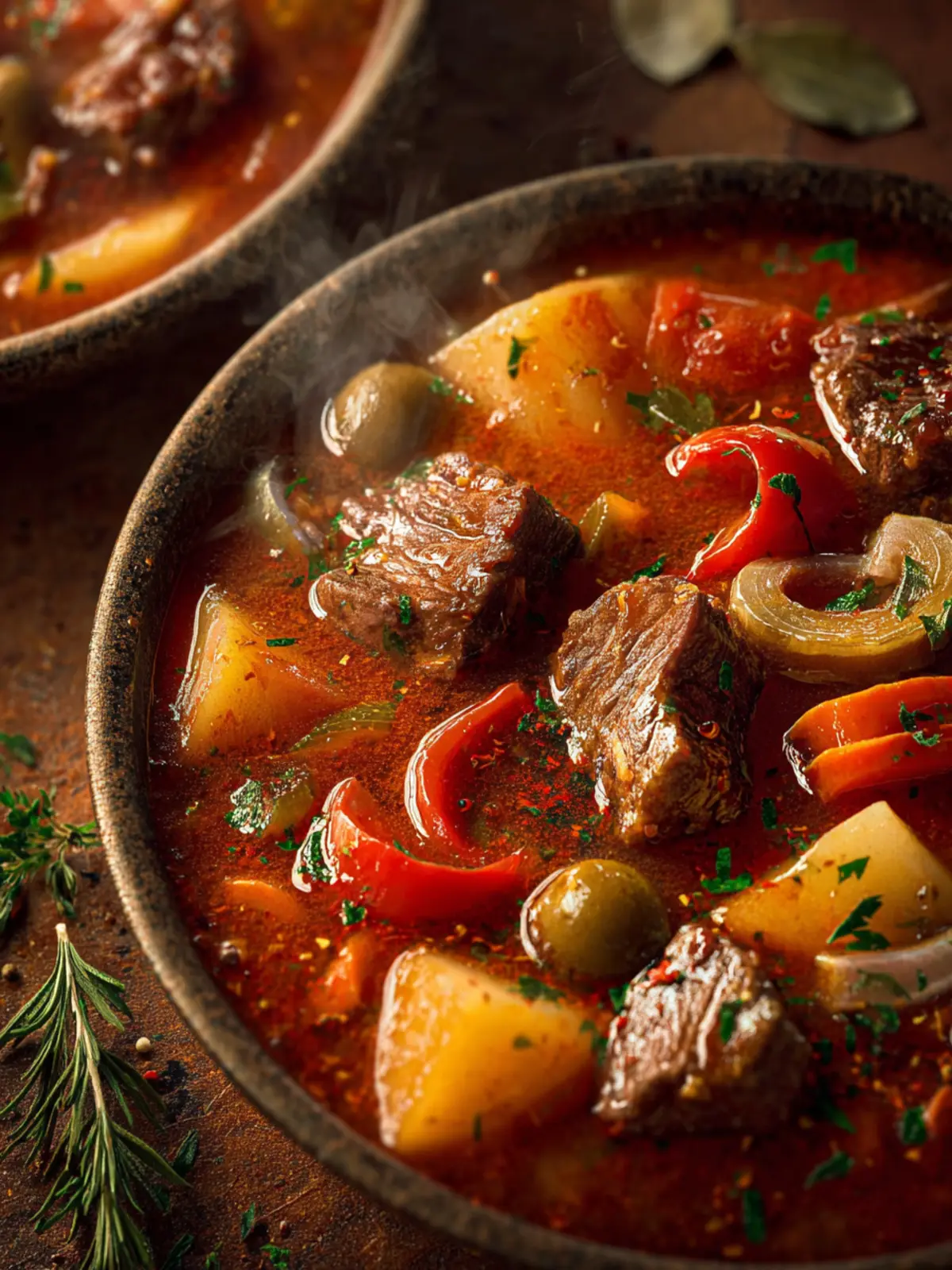
Variations of Spanish Beef Stew
Exploring different Spanish beef stew variations can turn a classic dish into a culinary adventure. Each region in Spain brings its own twist to this hearty dish, influenced by local ingredients and traditions.
Andalusian Style
In Andalusia, cooks often incorporate a rich array of spices, including paprika and saffron, into their Spanish beef stew. This variation might showcase tender chunks of beef melded with seasonal vegetables such as carrots and potatoes, providing a warming depth of flavor that’s perfect for sharing during family gatherings.
Catalan Twist
Catalonia takes a slightly different approach with its Spanish beef stew by adding chestnuts and a hint of dried fruit, creating a sweet-savory profile. The addition of a romesco sauce—made from nuts, roasted red peppers, and garlic—adds an exquisite layer. Imagine enjoying this stew on a cozy evening, accompanied by crusty bread for dipping.
Galician Influence
In Galicia, the emphasis may shift to incorporating more seafood alongside the beef. A Spanish beef stew might include prawns or clams, making it a delightful surf-and-turf creation. The locals often serve this dish with a sprinkle of fresh herbs, allowing the sea’s brininess to elevate the hearty meat.
Each region showcases the versatility of Spanish beef stew, allowing you to experiment and find your favorite version. Whether it’s spicy, sweet, or infused with the sea’s essence, the possibilities are endless!
Cooking Tips and Notes for Spanish Beef Stew
Creating the perfect Spanish beef stew is all about capturing the rich, robust flavors that define this dish. Here are some tips to elevate your stew-making game!
Quality of Ingredients
-
Beef: Opt for a cut like chuck or brisket that benefits from slow cooking. These selections become tender and flavorful as they simmer, absorbing the spices and aromas around them.
-
Vegetables: Using fresh vegetables like bell peppers, tomatoes, and onions enhances the overall taste. Their natural sweetness really shines through after hours of slow cooking.
Layers of Flavor
-
Seasoning: Don’t be shy with your spices! A generous dash of paprika can impart that smoky flavor typical of Spanish beef stew. Consider using both sweet and smoked paprika for a well-rounded heat profile.
-
Garlic and Herbs: Fresh garlic and a blend of herbs add depth. Incorporating fresh parsley or thyme towards the end of cooking can brighten the flavors beautifully.
Cooking Technique
-
Browning the Beef: Spend a few extra minutes browning the beef in batches. This step not only locks in moisture but also adds a lovely caramelized flavor to the stew.
-
Low and Slow: Patience is key. Allow the stew to simmer gently for at least two hours. This long cooking time is crucial for breaking down the connective tissues in the beef, resulting in melt-in-your-mouth goodness.
By following these tips, your Spanish beef stew will not only be hearty and satisfying but will also have that authentic touch that brings everyone to the table!

Serving Suggestions for Spanish Beef Stew
When you dive into a bowl of Spanish beef stew, you’re not just enjoying a meal; you’re experiencing a taste of tradition. This hearty dish deserves the perfect accompaniments to elevate its robust flavors.
Pair It with Warm Bread
Nothing quite beats the joy of dipping a crusty loaf into a rich stew. I recommend serving your Spanish beef stew with fresh crusty bread, like a traditional baguette or even some homemade cornbread. Not only does it soak up the flavorful broth, but it also adds a satisfying texture to the meal.
Complement with a Side Salad
A light, refreshing salad creates a perfect contrast to the warmth of your stew. Consider a simple green salad with mixed greens, cherry tomatoes, and a tangy vinaigrette. This balance of flavors makes each bite a delightful experience! You could also try a classic Spanish salad, incorporating ingredients like olives and peppers for an authentic touch.
Pair with a Glass of Red Wine
To truly embrace the essence of Spanish cuisine, pair your stew with a glass of robust red wine, such as a Tempranillo or Garnacha. The tannins and fruitiness of the wine elevate the richness of the stew, creating a symphony of flavors that will linger long after the last bite.
By thoughtfully considering these serving suggestions, your Spanish beef stew will surely impress and delight anyone at your dinner table!
Time Breakdown for Spanish Beef Stew
Creating a mouthwatering Spanish Beef Stew is not just an endeavor in the kitchen; it’s a culinary journey filled with aromas that whisk you away to the heart of Spain. Having a clear idea of the time it takes can make the preparation seamlessly enjoyable. Here’s the time breakdown to help you better plan your cooking adventure.
Preparation Time
Getting everything ready is half the battle. For this Spanish Beef Stew, you’re looking at about 20 minutes of preparation. This includes chopping vegetables, marinating the beef, and gathering all your ingredients.
Cooking Time
Once you’re prepped and ready, the cooking magic begins. The stew needs approximately 1 hour and 30 minutes on the stove to fully develop those rich, savory flavors. Slow cooking allows the beef to become tender while absorbing all the spices and seasonings.
Total Time
Combine the preparation and cooking, and you’ll have a total of around 1 hour and 50 minutes. This time spent is totally worth it when you’re enjoying a hearty, comforting bowl of Spanish Beef Stew at the end!
Nutritional Facts for Spanish Beef Stew
Understanding the nutritional profile of Spanish beef stew can help you appreciate this hearty dish even more. Packed with flavor and nourishment, this stew is a great addition to your culinary repertoire.
Calories
A serving of Spanish beef stew typically contains around 350-400 calories. This makes it a satisfying meal option that’s balanced and comforting, without being overly indulgent.
Protein
Offering about 30 grams of protein per serving, Spanish beef stew is an excellent source for those looking to boost their protein intake. The beef is not only filling but also vital for muscle repair and growth, making it perfect after a workout.
Sodium
With around 800-1000 mg of sodium per serving, it’s a good idea to be mindful of the salt you add. You can control sodium levels by using low-sodium broth or seasoning to taste, ensuring you still enjoy that rich flavor without unnecessary salt.
This stew combines flavor and nutrition wonderfully, making it a dish you’ll want to savor time and again.
FAQs about Spanish Beef Stew
Cooking a hearty Spanish Beef Stew is not just about following a recipe; it’s about crafting a flavorful narrative in a pot. If you’re diving into this comforting dish, you might have some questions as you gather ingredients and prepare to warm your kitchen. Let’s explore some common queries to ensure your stew turns out deliciously satisfying.
Can I use other cuts of beef for this stew?
Absolutely! While braising cuts like chuck roast are favorites for a reason—yielding that melt-in-your-mouth texture—you can certainly experiment with alternatives. Cuts like brisket or even round steak can work well too. Just keep in mind that tougher cuts benefit from longer cooking times to truly become tender.
What can I substitute for sherry in the recipe?
If sherry isn’t on hand, don’t worry! You can swap it with a splash of dry vermouth, white wine, or even a bit of apple cider vinegar mixed with water—a great alternative for adding depth. While sherry lends a unique flavor, any of these options can help retain the wonderful taste profile of your Spanish Beef Stew.
Can I make Spanish Beef Stew in a slow cooker?
Certainly! A slow cooker is a fantastic option if you prefer set-it-and-forget-it cooking. After browning your beef and sautéing the vegetables, transfer them to the slow cooker, add your liquids and seasoning, and let it simmer. Just make sure to allow enough time—about 6 to 8 hours on low, or 3 to 4 hours on high—so all those flavors meld together beautifully.
With these tips and answers, you’re all set to create a memorable Spanish Beef Stew that will warm hearts and fill stomachs!
Conclusion on Spanish Beef Stew
In wrapping up our exploration of Spanish beef stew, it’s clear that this dish is more than just a meal; it’s an experience that brings friends and family together. With its rich, hearty flavors and aromatic spices, each bite transports you straight to the vibrant streets of Spain. Whether served for a cozy dinner or at a festive gathering, preparing Spanish beef stew allows you to connect deeply with loved ones over shared stories and laughter. So, roll up your sleeves, gather your ingredients, and let the comforting aromas fill your kitchen—this is one dish you’ll be proud to share again and again.
Print
Spanish Beef Stew
- Total Time: 2 hours 50 minutes
- Yield: 6 servings 1x
Description
A hearty and flavorful Spanish beef stew perfect for a cozy meal.
Ingredients
Scale
- 3 tablespoons oil (divided)
- 2 pounds chuck roast (cut into large chunks)
- to taste salt and pepper
- 1 medium onion (diced)
- 1 anaheim pepper (diced)
- 3 garlic cloves (minced)
- ¼ cup all-purpose flour
- 2 teaspoons smoked paprika
- 1 bay leaf
- 3 sprigs thyme
- 28 ounces canned diced tomatoes
- 1 cup sherry
- 1 cup beef broth
- 1 cup water
- 4 medium Yukon potatoes (cut into large chunks)
- 4 medium carrots (peeled, cut into large chunks)
- ¼ cup Spanish olives (sliced)
- ¼ cup parsley (finely chopped)
Instructions
- Preheat oven to 325 degrees F.
- Heat 2 tablespoons of oil in a Dutch oven over medium-high heat. Add the chuck roast, season with salt and pepper, and sear on all sides, about 10 minutes. Remove the roast with a slotted spoon and set aside.
- Heat another tablespoon of oil in the Dutch oven and add the onion, Anaheim pepper, and garlic. Saute the vegetables until they are softened, about 5 minutes.
- Add ¼ cup flour and stir to coat the vegetables. Add back the beef along with the remaining ingredients, except for the potatoes and carrots into the pot.
- Bring to a boil, cover the pot, and continue to braise the meat in the oven for 2 hours.
- Remove the pot from the oven and add the potatoes and carrots. Continue to cook the stew in the oven for another 30 minutes or until the vegetables are tender.
- Season the stew with salt and pepper. Ladle the Spanish beef stew into bowls and top with sliced Spanish olives and chopped parsley. Serve immediately.
Notes
- This stew can also be made in a slow cooker; adjust the cooking time accordingly.
- Serve with crusty bread for a complete meal.
- Prep Time: 20 minutes
- Cook Time: 2 hours 30 minutes
- Category: Main Dish
- Method: Braising
- Cuisine: Spanish
Nutrition
- Serving Size: 1 bowl
- Calories: 400
- Sugar: 4g
- Sodium: 800mg
- Fat: 20g
- Saturated Fat: 7g
- Unsaturated Fat: 10g
- Trans Fat: 0g
- Carbohydrates: 30g
- Fiber: 5g
- Protein: 30g
- Cholesterol: 100mg